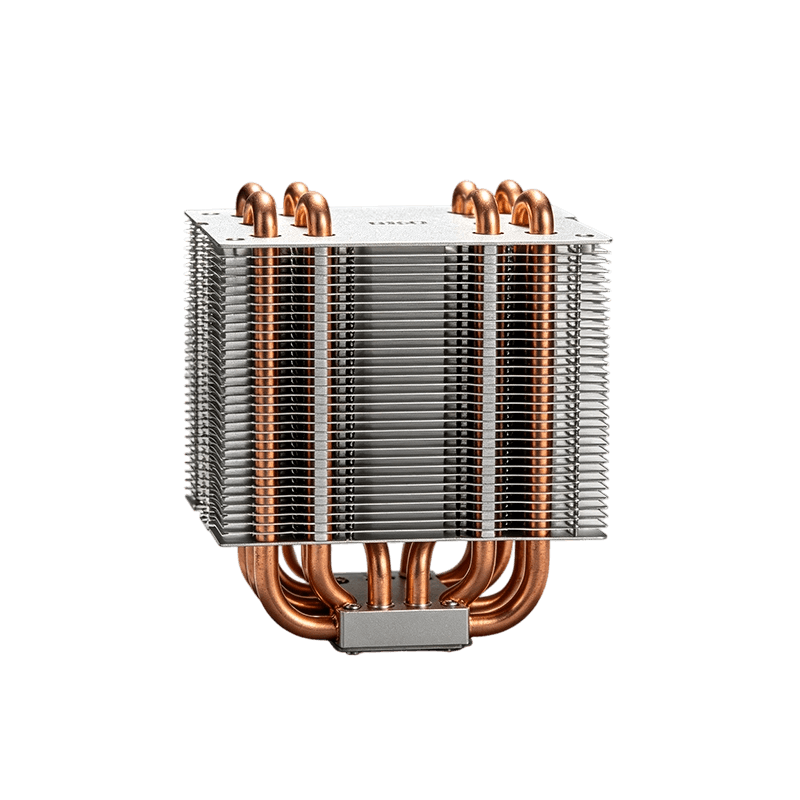
2U Server CPU Heat Sink
The 2U server CPU heat sink is a dedicated thermal component for 2U rack-mounted server equipment. Designed for narrow internal space and high-density hardware layout of 2U servers, the product adopts compact high-efficiency heat conduction structure to provide stable thermal control for single-core high-power processors, meeting long-term stable operating requirements of small-space rack server equipment.
CORE FEATURES
Ultra-compact structure adapts to limited 2U cabinet space.
High-density thermal structure improves unit heat dissipation efficiency.
Standard rack structure simplifies installation and assembly.
Industrial durability adapts to uninterrupted long-term operation.
TECHNICAL SPECIFICATIONS
| Parameter | Specification |
| Dimension | Standard 2U server dedicated size |
| Weight | Lightweight industrial structure |
| Material | High-strength thermal conductivity alloy |
| Supported TDP | Conventional 2U server CPU power range |
| Installation Method | Standard rack locking assembly |
2U Server CPU Heat Sink for Compact Rack-Mounted Servers
Jadecooling Tech develops 2U Server CPU Heat Sinks for rack-mounted server equipment requiring efficient thermal management within limited installation space. Designed around the structural requirements of 2U server chassis, this cooling component combines a compact heat conduction structure with a high-density thermal design to support stable CPU operation under sustained workloads.
Unlike conventional desktop CPU heat sinks, a 2U server heat sink must meet stricter height limitations and mechanical compatibility requirements. The cooling structure needs to fit the available space above the CPU while maintaining appropriate thermal contact and working with the server's internal airflow system.
For server manufacturers and OEM/ODM customers, selecting a suitable 2U Server CPU Heat Sink involves evaluating processor thermal requirements, actual chassis clearance, mounting dimensions and operating conditions together.
Key Design Considerations for 2U Server CPU Heat Sinks
1. Low-Profile Structure for Limited 2U Chassis Space
Installation height is one of the most important considerations when selecting a 2U Server CPU Heat Sink.
Although a 2U rack chassis has a standardized external height, the actual available space for the CPU heat sink is affected by the chassis cover, motherboard mounting height, internal structural components and surrounding hardware.
A suitable low-profile design should consider:
-
Available vertical clearance above the CPU.
-
Overall heat sink height and width.
-
Motherboard and component positioning.
-
Chassis cover clearance.
-
Installation and maintenance accessibility.
Buyers should provide actual internal chassis dimensions rather than relying only on the nominal rack height. This helps avoid mechanical interference during server assembly.
2. CPU Thermal Load and Heat Dissipation Requirements
The CPU thermal load determines the cooling capacity required from the heat sink.
When selecting a 2U server cooling component, buyers should consider the processor model, TDP, operating workload and expected ambient temperature.
However, TDP alone does not guarantee actual cooling performance. The final thermal result also depends on the available airflow, heat sink structure, thermal contact quality and server operating conditions.
For high-load server applications, thermal evaluation under representative operating conditions is recommended before mass production.
3. Airflow Direction and Heat Dissipation Structure
Server cooling performance depends on coordination between the CPU heat sink and the chassis airflow system.
In rack-mounted servers, internal fans commonly establish a defined airflow path through the chassis. The heat sink structure and orientation should be evaluated according to this airflow direction.
Important considerations include:
-
Airflow direction through the server chassis.
-
Heat sink orientation relative to the fan system.
-
Airflow resistance around the cooling structure.
-
Available ventilation space around the CPU.
-
Potential airflow obstruction from surrounding components.
A properly matched heat dissipation structure helps make better use of the available server airflow.
4. CPU Socket and Mechanical Installation Compatibility
A 2U Server CPU Heat Sink must match the mechanical requirements of the target processor and motherboard.
Before ordering, buyers should confirm:
-
CPU model and socket type.
-
Mounting hole positions and spacing.
-
Required installation hardware.
-
CPU contact area.
-
Surrounding motherboard component clearance.
-
Available space for fastening and assembly.
Different server platforms may use different mounting interfaces. Therefore, compatibility should be confirmed using the actual motherboard design rather than relying only on the 2U chassis category.
5. Long-Term Thermal Stability for Server Applications
Enterprise servers and industrial computing equipment often operate for extended periods under continuous workloads.
The heat sink structure should therefore be evaluated not only for initial cooling performance but also for long-term mechanical stability and consistent thermal contact.
Material properties, structural rigidity, installation consistency and the operating environment all influence the reliability of the cooling assembly.
For server OEM projects, validating the cooling component within the intended chassis configuration helps reduce potential thermal and mechanical issues during long-term operation.
Custom 2U Server CPU Heat Sink Development
Jadecooling Tech supports customized 2U Server CPU Heat Sink development for server manufacturers, industrial computing equipment manufacturers and enterprise hardware brands.
Customization can be evaluated according to the following project requirements:
-
Structural Dimension Adjustment: Fine-tune local structural dimensions according to available chassis space and installation requirements.
-
Surface Treatment: Support customized anti-corrosion and anti-oxidation surface treatments according to project specifications.
-
Assembly Fixture Matching: Customize assembly fixtures to accommodate different server installation structures.
-
Mechanical Compatibility: Review mounting positions, component clearance and installation interfaces based on customer drawings.
-
Thermal Structure Evaluation: Assess the heat dissipation structure according to processor thermal requirements and available chassis airflow.
For OEM and ODM projects, buyers can provide motherboard drawings, 3D models, existing samples or preliminary product specifications for technical evaluation.
The objective is to develop a server CPU cooling component that meets the target platform's thermal, mechanical and manufacturing requirements.
What Should Buyers Confirm Before Purchasing a 2U Server CPU Heat Sink?
Before requesting a quotation, server manufacturers and distributors should prepare the following technical information:
-
CPU Specifications: Provide the processor model, socket type and thermal design power.
-
Chassis Dimensions: Confirm the actual available installation height and internal clearance of the 2U server.
-
Motherboard Layout: Provide motherboard drawings, mounting hole positions and surrounding component dimensions.
-
Airflow Conditions: Specify the airflow direction, fan arrangement and expected operating environment.
-
Installation Requirements: Confirm mounting hardware, contact area and assembly interface.
-
Order Information: Provide the estimated sample quantity, bulk order volume and customization requirements.
These details help the engineering team evaluate product compatibility, identify potential installation conflicts and determine the appropriate cooling structure before production.
Related Server Thermal Control Products
Different server chassis configurations require different heat sink structures. Selecting the appropriate cooling component depends on the available installation space, processor arrangement and thermal requirements.
For server platforms with more available installation space and expanded heat dissipation requirements, explore our 4U Server CPU Heat Sink.
For high-density server platforms with multiple processors requiring an integrated thermal structure, explore our Multi-CPU Integrated Server Heat Sink.
These products address different server cooling configurations and provide additional options for server hardware manufacturers developing customized thermal management systems.
Frequently Asked Questions About 2U Server CPU Heat Sinks
1. What Is a 2U Server CPU Heat Sink?
A 2U Server CPU Heat Sink is a thermal management component designed for CPU cooling in 2U rack-mounted server systems. Its compact structure is developed to accommodate limited installation height while supporting stable heat dissipation during server operation.
2. How Do I Choose the Right Heat Sink for a 2U Server?
Consider the CPU model, thermal load, actual available installation height, motherboard layout and chassis airflow direction. The heat sink must meet both thermal requirements and mechanical compatibility conditions.
3. Can a 2U Server CPU Heat Sink Be Customized?
Yes. Customization can include local structural dimension adjustments, surface treatment and assembly fixture matching. Buyers can provide drawings or existing samples for technical evaluation.
4. Does a 2U Server CPU Heat Sink Fit All 2U Rack Servers?
No. Different 2U servers may have different CPU sockets, motherboard layouts, internal clearances and mounting interfaces. Actual dimensions and compatibility should be confirmed before purchasing.
5. What Information Is Required for a Bulk 2U Server CPU Heat Sink Order?
Buyers should provide the CPU model, socket type, TDP, motherboard drawings, available chassis clearance, airflow requirements and estimated order quantity. This information helps determine product suitability and customization requirements.

COMPATIBILITY
Compatible with mainstream 2U rack-mounted server platforms and matching server CPU models.
APPLICATION SCENARIOS
Enterprise storage servers, small data center rack servers, commercial industrial rack equipment.


CUSTOMIZATION CAPACITY


Supports fine adjustment of local structural dimensions.


Supports customized anti-corrosion and anti-oxidation surface treatment.


Supports personalized matching of assembly fixtures.