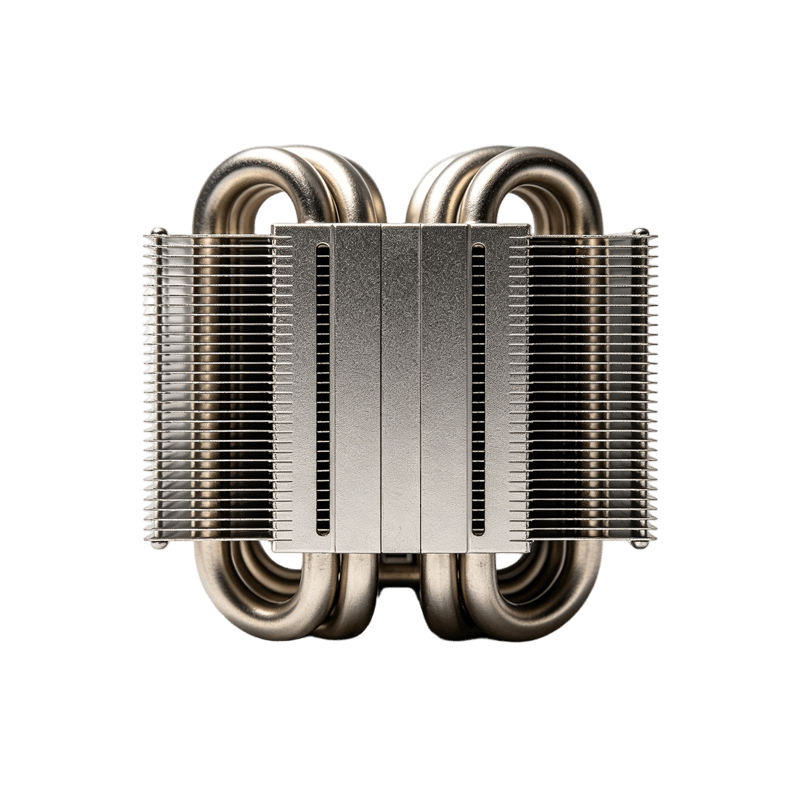
Graphics Card Heat Sink
The graphics card heat sink is a dedicated thermal control component for desktop independent graphics hardware. Targeting heat concentration generated by high-frequency graphic processing operation, the product conducts directional heat conduction and convection heat dissipation, stabilizing graphics card operating temperature and maintaining hardware operating stability under high-load computing and game scenarios.
CORE FEATURES
Dedicated structural design fits mainstream graphics card hardware layout.
High-efficiency thermal conduction adapts to high-frequency heat generation characteristics.
Compact structure matches standard graphics card assembly space.
Stable structural performance supports long-term high-load operation.
TECHNICAL SPECIFICATIONS
| Parameter | Specification |
| Dimension | Matched mainstream graphics card assembly size |
| Weight | Lightweight fitting structure |
| Material | High thermal conductivity alloy |
| Supported TDP | Conventional independent graphics card power range |
| Heat Dissipation Mode | Passive conduction / active convection optional |
COMPATIBILITY
Compatible with mainstream consumer-grade independent graphics card models and standard desktop chassis.
APPLICATION SCENARIOS
Game desktop equipment, graphic design computing devices, high-load video processing desktops.


CUSTOMIZATION CAPACITY


Supports dimensional fitting adjustment for special graphics card structures.


Supports upgrade of thermal conductivity materials.


Supports personalized modification of assembly interfaces.